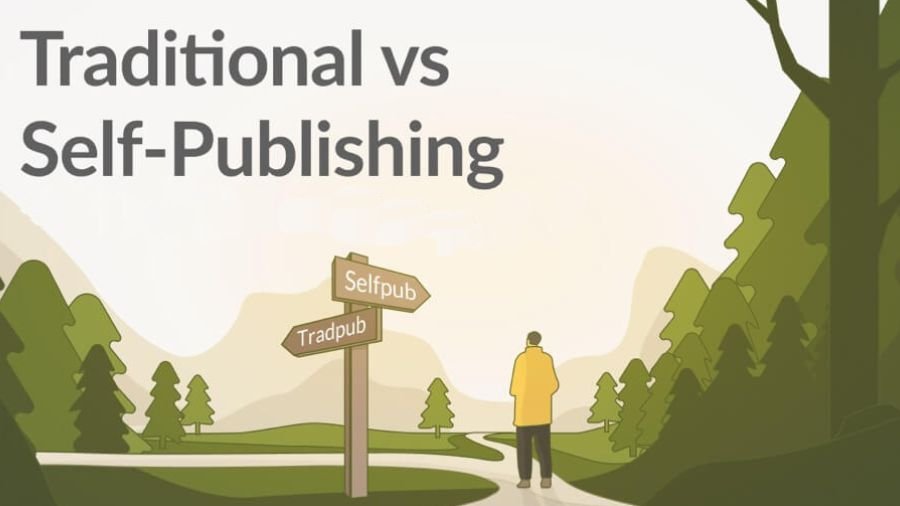
Every writer dreams of seeing their book in the hands of readers. But before that dream becomes a reality, one major decision must be made: How should you publish your book?
The two most popular paths are traditional publishing and self-publishing. Each comes with its own benefits and challenges, and the right choice depends on your goals, resources, and priorities as an author.
📚 What is Traditional Publishing?
Traditional publishing is the long-established route where an author submits their manuscript to a publishing house (usually through a literary agent). If accepted, the publisher takes care of editing, cover design, printing, distribution, and even some marketing.
Pros of Traditional Publishing:
- No upfront costs for the author
- Professional editing and design
- Access to bookstores, libraries, and international markets
- Added credibility and prestige
Cons of Traditional Publishing:
- Very competitive—many manuscripts get rejected
- Long timeline (can take months or years)
- Lower royalties (5–15% of book sales)
- Limited creative control (publisher decides on design, pricing, etc.)
✍️ What is Self-Publishing?
Self-publishing allows authors to publish their books independently, usually through platforms like Amazon KDP, IngramSpark, or Barnes & Noble Press. Here, you are the author and the publisher, meaning you control every step of the process.
Pros of Self-Publishing:
- Full creative control (cover, pricing, format, etc.)
- Higher royalties (up to 70% on digital sales)
- Faster publishing—weeks instead of years
- Direct connection with your readers
Cons of Self-Publishing:
- Upfront costs for editing, design, and marketing
- Limited access to physical bookstores
- All marketing and promotion are your responsibility
- Requires business skills as well as writing skills
⚖️ How to Decide Which is Right for You
Ask yourself these questions:
- Do you want prestige and bookstore distribution? → Traditional may be better.
- Do you want full control and faster publishing? → Self-publishing may be the way.
- Are you willing to handle the business side (marketing, design, budgeting)? → Self-publishing suits entrepreneurial authors.
- Are you patient and willing to wait for the right publisher? → Traditional publishing could be worth the effort.
🎯 Final Thoughts
There’s no one-size-fits-all answer. Traditional publishing offers credibility, structure, and distribution power, while self-publishing provides freedom, speed, and higher earnings.
The best path is the one that matches your vision as an author. Some writers even explore hybrid publishing—using both methods for different projects.
In the end, what matters most is that your story reaches readers, no matter which path you take.